
What does Danube Swabian identity mean today? Women from across the Danube region gathered in Budapest to discuss language, memory and the future. The first Danube Swabian Women’s Conference demonstrated just how strongly women continue to shape culture, tradition and community – and why their stories have long been overlooked. It was precisely these questions
What does Danube Swabian identity mean today? Women from across the Danube region gathered in Budapest to discuss language, memory and the future. The first Danube Swabian Women’s Conference demonstrated just how strongly women continue to shape culture, tradition and community – and why their stories have long been overlooked.
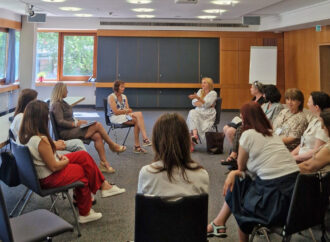
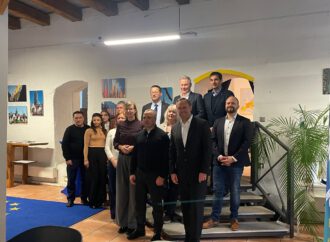
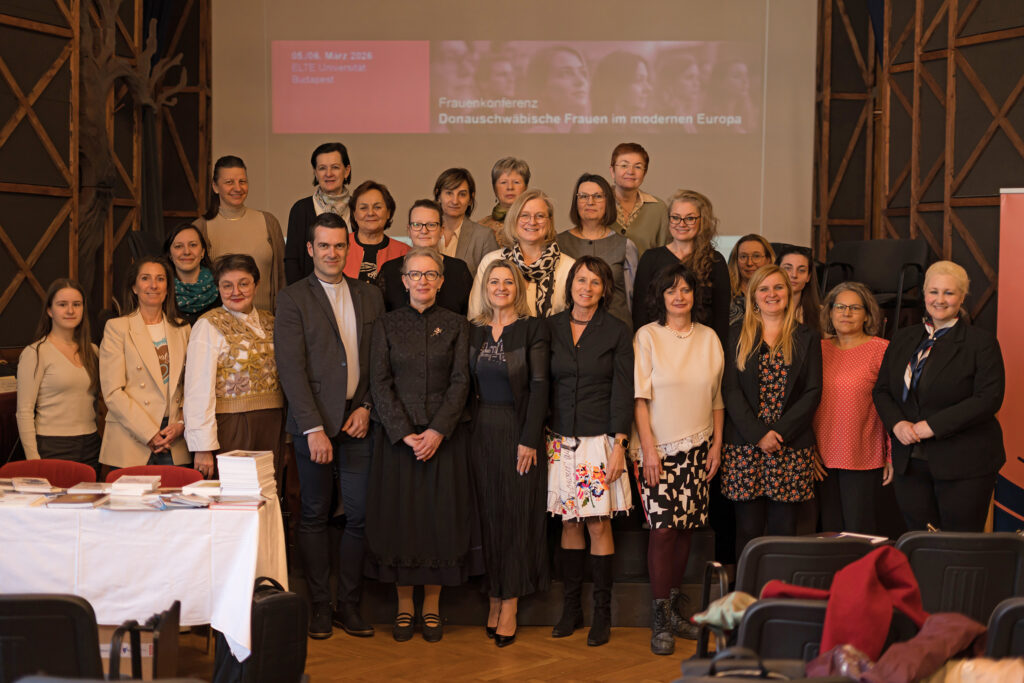
It was precisely these questions that were at the heart of the 2026 Danube Swabian Women’s Conference, which took place on 5 and 6 March at Eötvös Loránd University in Budapest. Under the title ‘WegZeichen – Danube Swabian Women in Modern Europe’, women from various countries in the Danube region came together to discuss language, memory and the future.
The conference in Hungary was organised by Veronika German, from the ‘Wegzeichen’ initiative, together with Sabine Geller from ‘danube connects’, the European magazine, in cooperation with the German Institute Foundation under the direction of Dr Gabriella Sos.
The event was sponsored and funded by the Danube Swabian Cultural Foundation of the State of Baden-Württemberg, which has for many years supported projects that highlight the culture, history and identity of the Danube Swabians within a European context.
Special thanks also go to Christiana Pordes (Weidel) from The World of NGO, who played a key role in supporting the proposal for this conference. As an educational scientist, project manager, journalist and lecturer at universities and universities of applied sciences, she has been working for many years on issues relating to civil society and Europe, gender, mentoring and the current challenges of migration. Her commitment has played a key role in making this gathering of women from across the Danube region a reality.
A project rooted in personal history
The conference was initiated by Veronika German from Budapest and Sabine Geller from Ulm. Their aim was to strengthen the networks between women with Danube Swabian roots and to raise the profile of their role as custodians of language, tradition and community.
For Veronika German, the project is deeply personal.
“WegZeichen is a labour of love,” she says. “It is a search for traces – and at the same time a new beginning.”
Her mother was a genealogist and documented her own family’s history with great dedication. After her death, German was faced with a crucial question: how can this work be continued without merely looking back?
For whilst many genealogical archives contain family names, dates and migration routes, the voices of women often appear only marginally within them.
Yet it was they who passed on language, rituals and everyday culture across generations.
For whilst many genealogical archives contain surnames, dates and migration routes, women’s voices are often only marginally represented within them.
Yet it was they who passed on language, rituals and everyday culture across generations.
This observation initially gave rise to a platform for the stories of Hungarian-German women – and ultimately to the larger project ‘WegZeichen’, which now connects women from across the Danube region.
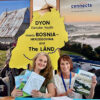
And whilst Veronika German developed the ‘WegZeichen’ project out of a personal search for traces of her family history, Sabine Geller brings a journalistic perspective to the project. She is the founder of the European magazine danube connects, which focuses on culture, history and social developments in the Danube region.
Her connection to the region is also shaped by her personal history: Geller herself comes from a Danube Swabian family on her father’s side, whose story she has recounted in a book about her own roots. Part of her family still lives in Hungary today – a connection that continues to shape her work in the Danube region.
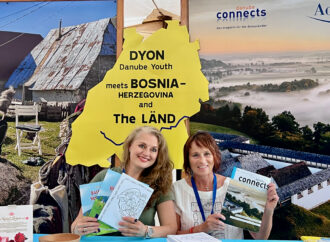
In addition, she initiated the Danube Women Stories project, which collects and highlights the life stories of women from the region. As part of the conference, a small exhibition was also presented, making personal stories of migration, memory and identity accessible through narrative and visual means.
Between memory and the future
Right from the opening keynote address by Olivia Schubert, a politician specialising in minority affairs, entitled “With Courage and Identity: A Hungarian-German Woman at the Helm of FUEN”, it was clear that the conference was not about nostalgia. It was about the present and the future.
Panel discussions such as “Our Mothers, Our Grandmothers – How Identity Lives On” or storytelling sessions on the second day of the conference combined historical memory with modern forms of storytelling.
For identity is not something static.
“Danube Swabian identity is in a state of flux,” explains Sabine Geller. “It is moving away from the traditional, often village-based way of life towards an identity that asserts itself in urban, digital and international contexts.”
The crucial question, therefore, is not whether identity changes, but how it remains recognisable in the process.
The Trauma of the Post-War Period
Many of the conference discussions looked back to a period that continues to shape the Danube Swabian community to this day: the end of the Second World War.
For many families, the years 1944 and 1945 marked a dramatic turning point. Expulsion, expropriation and forced labour affected hundreds of thousands of people of German origin in South-Eastern Europe. Women in particular had to bear an enormous burden during this period.
Eyewitness accounts speak of violence, hunger and sexual assaults. Many men had been killed in the war or were in captivity. Women had to guide their families through a time of political and social upheaval on their own.
Yet this was kept silent for a long time.
The physical wounds healed.
The memories remained.
Language as a bridge between generations
Even after the war ended, the challenges did not cease. Between 1946 and 1948, around 200,000 people of German origin were expelled from Hungary. Others were allowed to stay, but lived under intense pressure to assimilate.
Speaking German could become a problem.
Many families therefore decided not to pass the language on to their children – for fear of discrimination.
Today, new generations are trying to pick up these lost threads again.
Initiatives such as the VUK Association for Hungarian-German Children are campaigning for bilingual education. Cultural projects and festivals are boosting the visibility of the German language in public spaces.
The question of language is always also a question of opportunities. Researcher Gabriella Sos from the German Institute in Hungary is investigating how far young people with German language skills can go in German-speaking regions. Her work shows that language is not only cultural heritage, but also a key to education, mobility and international networks.
The work of Dr Györgyi Vastag-German also highlights just how important such processes are. For the past five years, she has been organising the Wunderbar Festival, a cultural festival that takes place every spring. More than 200 events – ranging from nurseries and schools to universities – have taken place during this time. Her aim is clear: the German language should remain a living part of Hungarian society.
The media also play a role in this. The Pirosch Radio Cultural Foundation regularly broadcasts German-language programmes. Every Saturday at 4.30 pm, there are discussions with cultural figures – most recently, for example, with a director about her work in the Danube region. The foundation is self-funded and sees itself as a cultural bridge.
Voices that brought the conference to life
The conference was also repeatedly infused with fresh vitality by the writer Katharina Eismann, who enriched the programme with her passionate readings. In particular, her onomatopoeic poem “Dschanga Manga” – a poetic homage to the linguistic diversity of the Timișoara of her childhood – drew plenty of laughter and visible enthusiasm from the audience.
“Diversity is a flower. It wants to be watered, nurtured and picked,” she said by way of introduction – before transporting the audience into the resonant world of Timișoara’s old trams with a linguistic mosaic of Hungarian, Romanian, German, Swabian and Yiddish sound fragments.
For a moment, the conference became exactly what the event in Budapest was all about: a living space where history, language and memory could not only be discussed, but also heard, felt and experienced together.
Guardians of identity
And conferences like this one show that women play a central role in this.
They are often the ones who preserve stories, pass on recipes, keep traditions alive and pass on the language to the next generation.
Szandra Fuchs tells one such story. As a young woman, she wanted to become a Benedictine nun. But a nun said something to her back then that would change her life: she had too much energy to remain behind convent walls. Her calling, she was told, was to serve people – out there, in the world. Today, Szandra Fuchs is a diplomat. She forged her own path to this position, guided by her family’s values. Her grandfather, Baron Debrezin, and her grandmother, who was expelled from Hungary at the age of 86, instilled in her a strong sense of heritage and responsibility. After completing her education in Germany, she made a conscious decision to return to Hungary. For her, it is clear: those who benefit from a society should also give something back.
Perhaps that is why they are the true guardians of an identity that began along the Danube more than 300 years ago – when settlers arrived in south-eastern Europe in the simple wooden boats known as ‘Ulmer Schachtel’.
And that was precisely what the conference in Budapest was all about: not just remembrance, but passing on the story. For, as became clear time and again during the conference, identity is not a closed chapter in history.
It is an ongoing dialogue between the past and the future – sustained by people who are willing to keep telling these stories.
Mirella Sidro