
EUSDR
- Home
- EUSDR
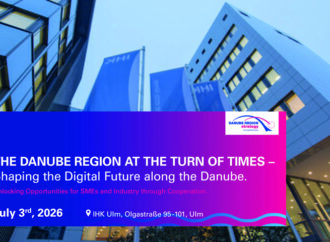
AI, Cybersecurity, Business Transformation: Future Forum in Ulm0
On 3 July, the Ulm Chamber of Industry and Commerce will host a high-profile conference on the future of the Danube region: under the title “The Danube Region at the Turn of Times – Shaping the Digital Future along the Danube”, the business conference will focus on key issues relating to digitalisation, artificial intelligence (AI)
READ MORE
Municipal motor in the Danube region0
The Danube Office Ulm/Neu-Ulm, a non-profit limited company of the two cities, sees itself as a municipal motor for co-operation along the Danube. The team headed by Sebastian Rihm acts as a leading partner in EU projects, as the organiser of the international Danube Festival Ulm/Neu-Ulm and as a connecting element in numerous networks. Sabine
READ MORE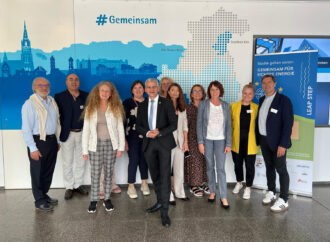
Cities go ahead: Together for secure energy0
During the International Danube Festival on July 8 in Ulm, the exhibition ‘LEAP STEP’ – Together for Secure Energy opened at the Ulm Chamber of Industry and Commerce. The exhibition was organized as a European project under the direction of the Maison de l’Europe Paris together with the twin cities of Ulm, Vincennes, Budapest, Avila,
READ MORE
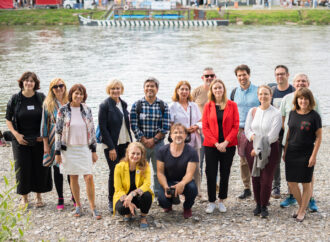
DANUBE MEDIA BOOTCAMP in Ulm0
Journalists from five Danube countries took part in the Danube Media Bootcamp during the International Danube Festival in Ulm. From July 10-12, workshops were held with presentations by journalists focusing on the topic of ‘Nature Conservation and the Danube’. Journalists from Budapest, Romania and Serbia presented their investigative reports. Orsolya Fülöp from Budapest presented her
READ MORE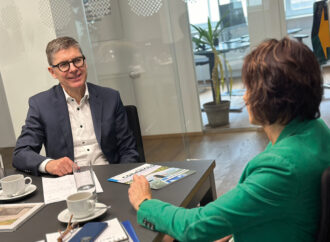
PERSPECTIVE DANUBE Commitment to the Danube region0
Baden-Württemberg has always cultivated diverse relationships in the Danube region. The Baden-Württemberg Foundation plays a key role in this. With its “Perspective Danube” programme, it primarily supports the development of civil society and provides funding for educational, cultural and youth projects, among other things. Dr Andreas Weber, who has been responsible for the “Perspective Danube”
READ MORE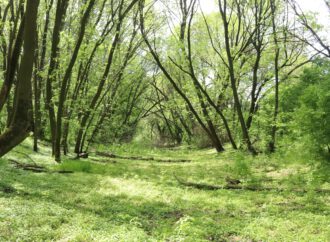
Focus on floodplains0
The Danube Floodplain project aims to improve the transnational integrative water management and flood risk prevention while maximizing benefits for biodiversity conservation by restoring floodplains, combining classical and green infrastructure, natural retention measures, involving stakeholders. In the past decades, heavy alteration of wetland ecosystems characterized the land use. Since 1970, 90% of the global wetlands
READ MORE