
Economy
- Home
- Economy

The Danube Region at the Turn of Times – New forums for cooperation0
Like no other crisis before, war threatens our coexistence in the European Union. The term “turning point” aptly describes the distinctive phase in which we find ourselves. It is therefore important for the EU to take a clear and united stance. The European gaze is strongly directed towards the East. Cooperation is becoming even more
READ MORE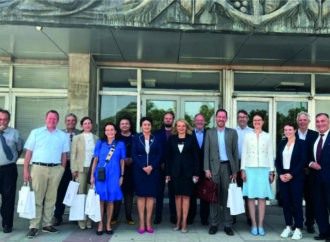
More resilience in the Danube Region: Danube Alliance Network0
The semiconductor crisis at the beginning of 2020 and its impact on the automotive industry have made it clear: global supply and value chains are more crisis-prone than expected. What began with the COVID 19 pandemic was fuelled once again by the war in Ukraine – supply chains do not function reliably, trade routes at
READ MORE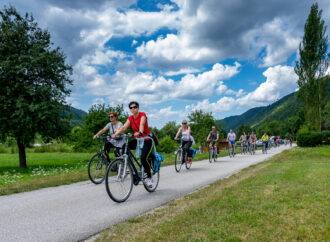
The “Hydropower Plant” of interregional Danube projects0
The Danube Offi ce Ulm/Neu-Ulm has long been an important partner and source of information for danube connects – after all, it has been acting as a project agency for interregional cooperation since 2002 and supports encounters and exchanges in the whole Danube region. Our readers have certainly already come across the biennial Danube Festival
READ MORE
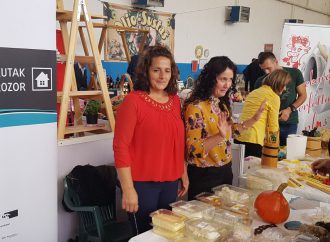
A MILK COOPERATIVE creates prospects for women in rural Bosnia0
The opportunities for women in rural regions of Bosnia-Herzegovina are limited. This is especially true of women who survived the violent war in their villages in the 1990s, or who fled and returned. 15 years ago, AMICA e.V. began to set up self-organised contact points for these women in the Drina valley (Zvornik region) with
READ MORE
Digitisation goes Danube0
Professional qualification and entrepreneurial spirit are important factors in creating attractive jobs in the Danube region. Digitisation offers a particularly great potential for this. The project “Qualifying women for digitisation in the Danube region” lead by the Stuttgart section of Business and Professional Women wants to support this potential. It is supported by the Baden-Württemberg
READ MORE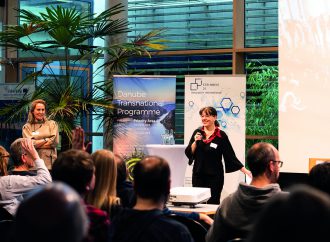
Smart Cities – Barcamp Böblingen0
“Danube Competitiveness in Practice: Smart Cities – Innovative Digital Business Perspectives for SMEs” – this was the motto of an event organised by the working groups of Priority 8 of the EU Danube Region Strategy (PA8 EUSDR), “Digital Danube” and “Innovation and Technology Transfer”. The working groups are led by Prof. Dr. Hertweck from Reutlingen
READ MORE