
Since the start of Russia’s war of aggression, Ulm and Neu-Ulm have been supporting their Ukrainian twin town in a variety of ways: the partnership, which was officially launched in spring 2023, initially focused heavily on humanitarian aid and donations of goods; however, it is increasingly shifting towards more sustainable and institutional forms of cooperation.
Since the start of Russia’s war of aggression, Ulm and Neu-Ulm have been supporting their Ukrainian twin town in a variety of ways: the partnership, which was officially launched in spring 2023, initially focused heavily on humanitarian aid and donations of goods; however, it is increasingly shifting towards more sustainable and institutional forms of cooperation.
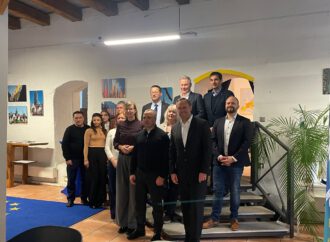
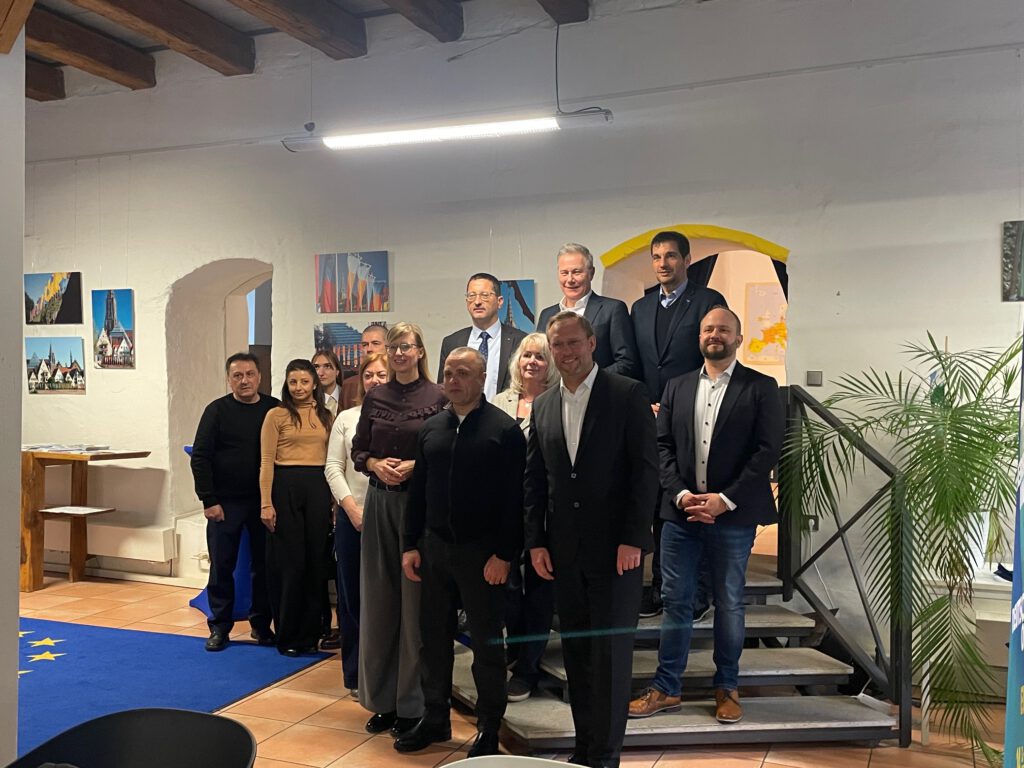
At the end of January, a delegation from Bilhorod-Dnistrovskyi visited municipal facilities in Ulm and Neu-Ulm that provide urban infrastructure services such as heating, water and waste management. According to a press release from the City of Ulm, the study visit marks an important step in the relationship: “the transition from immediate solidarity to medium-term capacity building and technical cooperation.”
From solidarity to concrete projects
The study tour was part of a project run by the United Nations Industrial Development Organisation and forms part of the initiative ‘Green industrial recovery through municipality-based development in Ukraine’, which is funded by the German Federal Ministry for Economic Cooperation and Development (BMZ). The sub-project is entitled ‘Empowering communities: innovative water and energy solutions for the Bilhorod-Dnistrovskyi community’.
The programme included a guided tour of the Donautal waste-to-energy plant, visits, visits to biomass and district heating facilities, and a tour of the Steinhäule sewage treatment plant in Neu-Ulm. At Stadtwerke Ulm/Neu-Ulm, the delegation learnt about hydropower and drinking water treatment, and at Entsorgungsbetriebe Ulm, they were briefed on waste management and the sewerage network. The programme also included a visit to a biogas trade fair and discussion sessions with experts from the worlds of science and industry.
Ulm’s Lord Mayor Martin Ansbacher stated that the visit had demonstrated just how much both cities can learn from one another. At the same time, he was impressed by the strength and determination of the Ukrainian partners. Neu-Ulm’s Lord Mayor Katrin Albsteiger also described the solidarity partnership as “resilient, adaptable and forward-looking”.
The Danube Office as a driving force
The delegation familiarised itself not only with technical facilities but also with regional networks, which highlights how the partnership is embedded within the Danube region. The Danube Office Ulm/Neu-Ulm, which has been coordinating projects along the Danube since 2002, also organised the visit. Office manager Sebastian Rihm emphasised that town twinning is resilient when, beyond symbolic solidarity, sustainable professional networks are established. This is precisely what is currently at stake: organising knowledge transfer – realistically, long-term and on an equal footing.
The discussions and the partnership with Bilhorod-Dnistrovskyi thus exemplify a new phase of municipal cooperation in the Danube region: less ceremonial, more technical – and more politically relevant than ever.
Daniel Hirsch,
Budapest
Info: According to the Danube Office in Ulm/Neu-Ulm, the towns handed over an accessible transport vehicle to their Ukrainian twin town in April, funded by the German Society for International Cooperation (GIZ) and the BMZ. The organisation and delivery were carried out with the help of the charity Ermstal hilft e.V., whose commitment was crucial. The Sprinter is primarily intended to support people with disabilities as well as local social and medical services.