
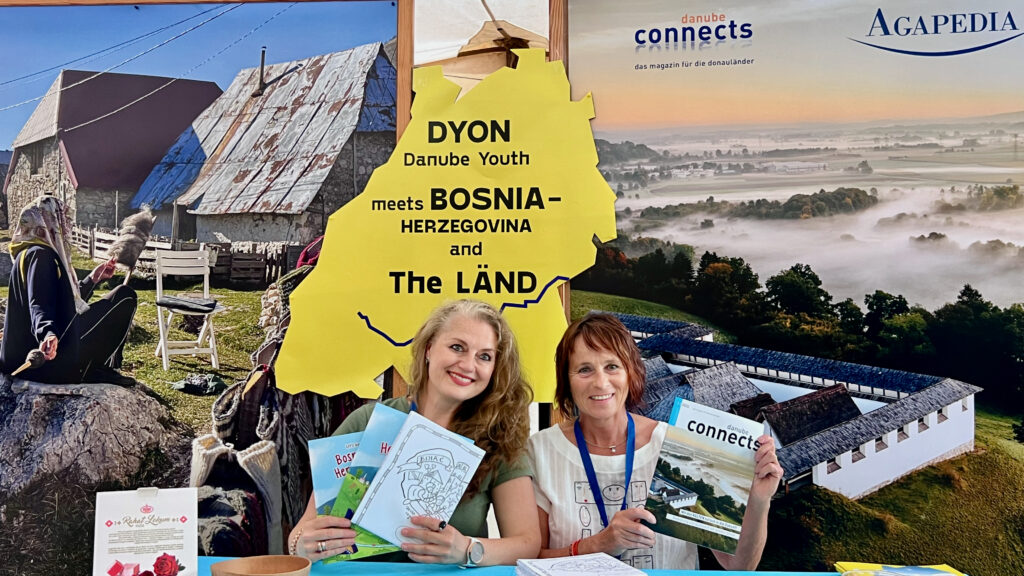
For three days, Theme Tent 2 at the International Danube Festival in Ulm became a meeting place for Baden-Württemberg and Bosnia and Herzegovina. There was spinning, snacking and marvelling. There are moments when a tent is more than just a tent. For example, when a visitor from Ulm holds a hand spindle for the first
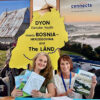
For three days, Theme Tent 2 at the International Danube Festival in Ulm became a meeting place for Baden-Württemberg and Bosnia and Herzegovina. There was spinning, snacking and marvelling. There are moments when a tent is more than just a tent. For example, when a visitor from Ulm holds a hand spindle for the first time, guided by a woman in Celtic dress – whilst next door, photographs of the Danube glow and the scent of rose and nut-flavoured Turkish delight wafts through the air. For three days, from 3 to 5 July, Theme Tent 2 at the 14th International Danube Festival was exactly that: a place where Baden-Württemberg and Bosnia and Herzegovina joined hands.
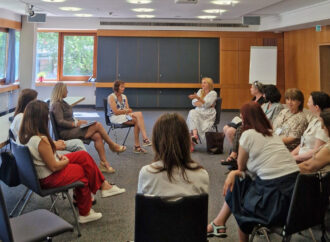
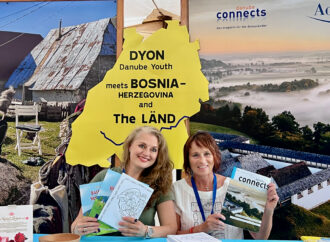
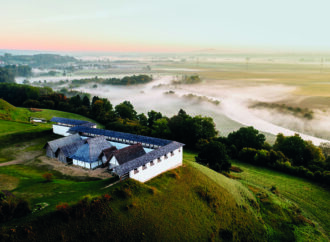
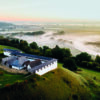
“DYON meets Bosnia-Herzegovina and The Länd” – that was the name of the programme, backed by a well-established trio: Sabine Geller, editor-in-chief of danube-connects; the German-Bosnian journalist Mirella Sidro; and Stefan Barth, director of the children’s charity Agapedia, founded 30 years ago by Jürgen Klinsmann. Together, the three have already organised two DYON Boot Camps: the first in 2025 in Bosnia and Herzegovina, and the second this May in Baden-Württemberg on the Danube – the very place where Celtic culture once began at Heuneburg.
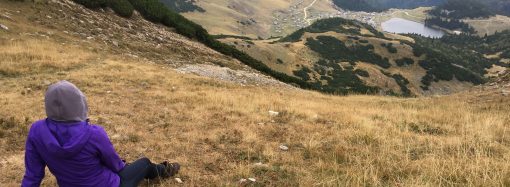
And it was the Celts who provided one of the finest moments in Ulm. Members of the Heuneburg Celtic group demonstrated in the tent how wool was spun centuries ago – and the guests didn’t need to be asked twice. Time and again, visitors tried their hand at the spindle themselves, focused, laughing, and surprised at just how much skill this ancient craft requires. What many learnt for the first time was that this technique is not merely a relic of the past. In Lukomir, for example – the highest and oldest mountain village in Bosnia and Herzegovina – women still spin their wool in this way to this day.
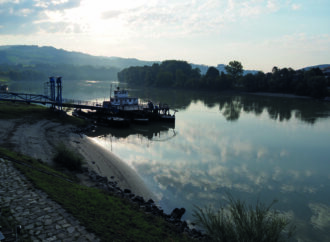
But why is Bosnia and Herzegovina part of the Danube region, even though the Danube never flows through the country? The answer is a flowing one: its rivers – the Una, Sana, Vrbas, Bosna and Drina – flow into the Sava, which in turn flows into the Danube, thus contributing to Europe’s second-largest river. Without the waters of Bosnia and Herzegovina, the Danube as we know it would not exist.
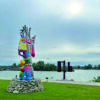
It is no coincidence that this very idea was also on the minds of the festival-goers: the 666 flags lining the banks of the Danube this year – handcrafted at the Art Quarter in Budapest, inspired by fairy tales and legends from all the Danube countries, including Bosnia – tell the same story. ‘The river is the result of an extensive network of waterways,’ the artists write in their concept. And this is reflected in the fact that the Danube is regarded as the most international river in the world, flowing through 10 countries and encompassing many more within its catchment area.
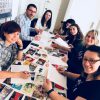
The guests arrived, marvelled – and stayed. With lokum from Bosnia and Wibele from the Ländle, the conversations flowed naturally. The youngest visitors discovered Bosnia and Herzegovina through colouring maps to take home, which the Sarajevo-based organisation Mali Ambasadori (the Little Ambassadors) had specially translated into German. And those who were lucky even won a piece of art: one of the photographs on display by Dominic Lars Breitbarth – whose shots of the Danube region and Ulm provided the tent with its atmospheric backdrop – was raffled off. The winner, a resident of Ulm, was beaming: a “work of art from his home town”.
Some encounters, however, ran deeper. There was a couple who, ten years ago, decided that rather than moving to the USA with their four children, they would prefer to travel through Europe – and in doing so got to know all the Balkan countries. When they watched the film in the tent about DYON in Baden-Württemberg and Bosnia and Herzegovina, they had an idea: the children should take part in the next boot camp.
Literature also built its own bridge: at the Stadthaus Ulm, the Bosnian-Herzegovinian writer Faruk Šehić, winner of the European Union Prize for Literature, read alongside the Austrian author Franziska Füchsl under the title “What We Talk About When We Talk About Rivers”. His river, the Una, and her river, the Mühl, both flow towards the Danube. Two currents that meet through a river, even if they do not flow side by side.
The festival weekends also had a poetic touch: on Saturday and Sunday, the Romanian-German poet S. Katharina Eismann and the Ulm-based musician Bernd Weltin led a poetic and historical walk – an entertaining tour through the Fischerviertel, featuring poems, anecdotes, legends and stories, following in the footsteps of the Danube Swabians, bridging the past and the present. Once upon a time, they set out from Ulm, travelling down the Danube towards an uncertain future – their story, too, is a story of the river that connects.
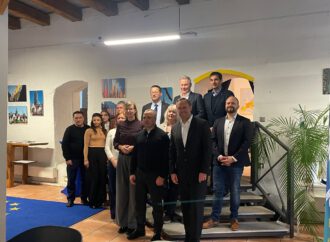
We also welcomed some distinguished visitors: Ulm’s Lord Mayor Martin Ansbacher, First Mayor Martin Bendel, the Hungarian politician Péter Márki-Zay, and Damir Arnaut, the Ambassador of Bosnia and Herzegovina, were given a guided tour of the marquee.
When the last guests left on Sunday evening, there was a sense that things would continue to move forward here. In September, the next DYON Boot Camp will take place in Bulgaria. The thread, which has been spun further in Ulm, shows no sign of breaking.
The presentation was made possible by the Baden-Württemberg Foundation, the Baden-Württemberg State Ministry, and the Danube Office Ulm/Neu-Ulm.