
How a mayor and his team in southern Hungary are keeping Hungarian-German culture alive. In southern Hungary, Sabine Geller took me along to the weekly choir evening, where her relatives also play and sing. When I walked into the room, I felt a bit like a spoilsport. That lasted about three seconds, though, as I
How a mayor and his team in southern Hungary are keeping Hungarian-German culture alive.
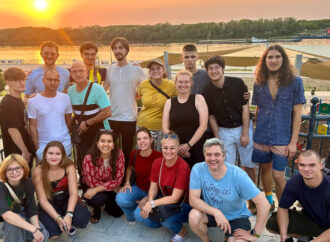
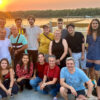
In southern Hungary, Sabine Geller took me along to the weekly choir evening, where her relatives also play and sing. When I walked into the room, I felt a bit like a spoilsport. That lasted about three seconds, though, as I was welcomed as part of the community. The group was incredibly warm and delighted to have me there! Over food and drink, there was laughter and storytelling – in perfect German, of course. I missed the singing itself: apparently they sang two songs whilst I was sitting next door with the mayor for an interview.
The mayor, whom everyone calls Specki
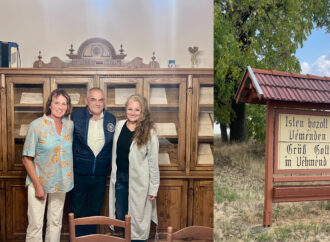
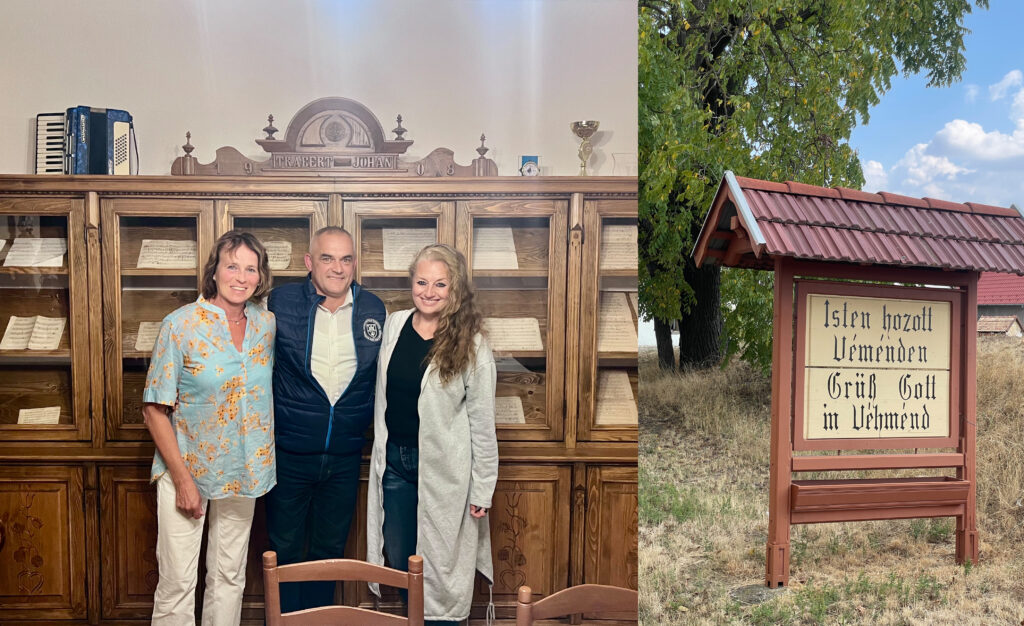
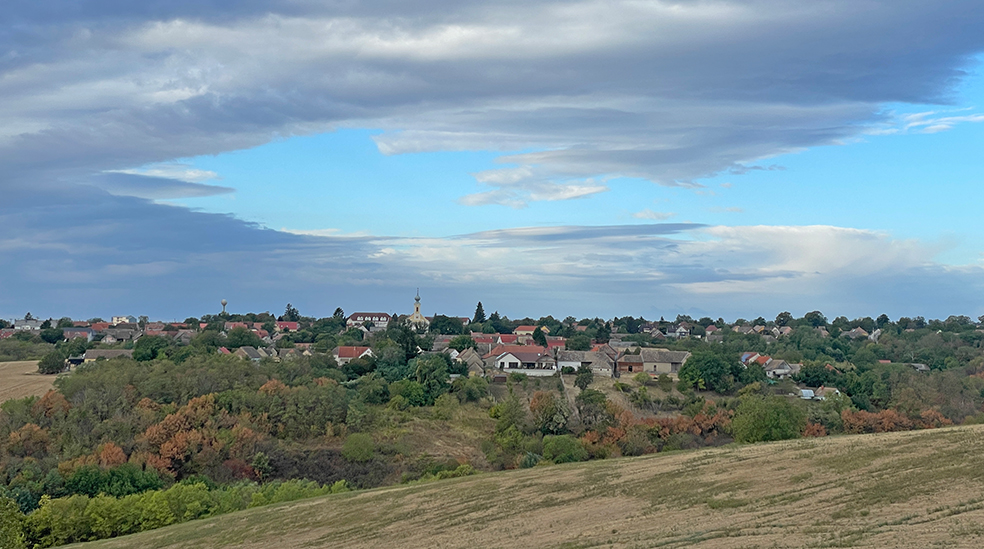
Zoltán Szalonna, known to everyone as Specki, walks in looking athletic and remarkably full of energy. He was born in Véménd in 1975, and his family is a microcosm of the village: one Hungarian-German branch that was not expelled, and a Hungarian branch that was expelled here from Upper Hungary after the war. Why one half was allowed to stay is a story in itself. The family name had been Magyarised: Szalonna, Hungarian for ‘bacon’. Whoever compiled the expulsion lists read the name and wrote: ‘Hungarian’. The fact that his grandfather spoke hardly any Hungarian and his great-grandmother none at all was not noted on the list.
By the end of the war, up to ninety per cent of the inhabitants were Hungarian Germans. Then came the population exchange. They were told to leave with twenty kilos of luggage – the same amount their ancestors were said to have brought with them upon their arrival three hundred years earlier. The empty houses were filled by Hungarians from what is now Slovakia and Székelys from Romania. Those who returned later found no home to return to. Six ethnic groups have lived here: Swabians, Hungarians, Serbs, Jews, Roma and Székelys.
A hundred people, a driving force
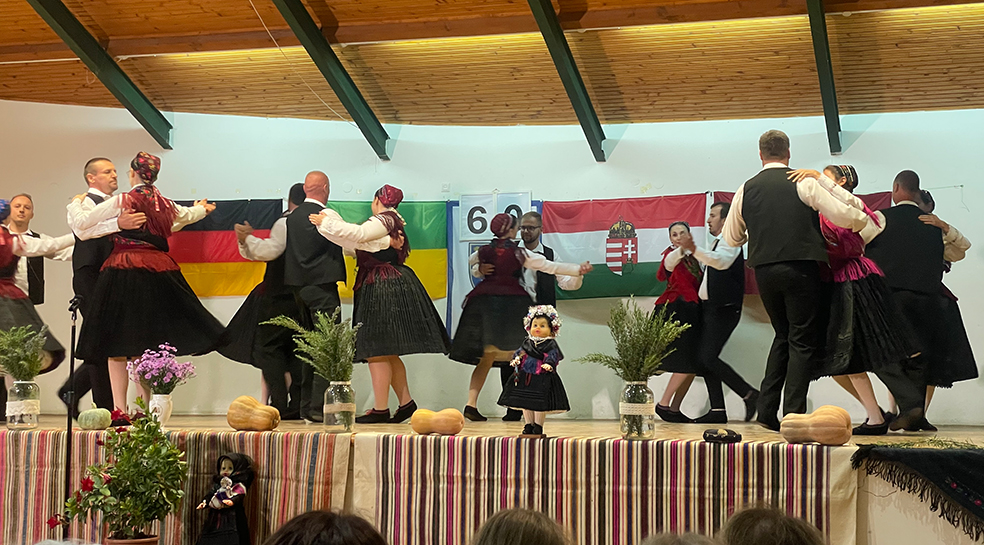
Today, according to Specki, the Hungarian Germans make up around 45 per cent of the population. What keeps them going is not a single club, but a network: a children’s dance group, an adult dance group, a mixed choir, a singing circle, a men’s choir, a church choir, a brass band, a children’s brass band and a singing duo. Around a hundred people, ranging from nursery school children to great-grandmothers, form the ‘driving force’, says Specki.
Specki himself was six when he joined the dance group and was given his trumpet. It was never a question, he says; it was simply part of life. His three children, aged eight, nine and ten, are following in his footsteps – they have been dancing and making music diligently for three years now.
Infrastructure rather than folklore
It is worth noting that culture is not treated here as the preservation of traditions, but as a task for which structures are put in place. The German self-governing body was founded in 1994; in 2016, it took over the running of the bilingual ethnic minority nursery school, following consultation with the Roma self-governing body, which had to give its consent – and did so. The primary school is also bilingual.
Applications for music lessons were submitted via the regional self-government of the Hungarian Germans: 34 children are now being taught and progress from the children’s brass band into the full brass band.
The elegant twist in this story is that, a few years ago, the German and Roma self-governments simply swapped their applications. Trumpets became violins, and the tuba became a double bass. In one fell swoop, both groups were provided with instruments and teachers. This also led, incidentally, to the formation of a tambura band.
Added to this are the youth organisations: the VUK for children up to the age of fourteen, and the GJU for the older ones, whose core group is now aged between 17 and 25.*
And then there are the music books – hundreds of them. During the interview with Specki, which takes place in the music exhibition room, we are surrounded by them. Here, too, everything has been lovingly arranged in the traditional style. It is as if one has taken a journey back in time. The collection has been built up over thirty years; much of it still lies in boxes, scattered across the floor. This gave rise to the idea of a dedicated building to preserve these treasures and ensure that the music of the Hungarian Germans is not forgotten.
 Two billion forint and the question of water
Specki has already achieved quite a lot. But he has no intention of stopping any time soon. The plan is for a cultural centre with a concert hall designed to have acoustics that do not require amplification, including a recording studio for young musicians. This option exists in Budapest, but it is prohibitively expensive. The cost of the project: around two billion forint (approximately 5.5 million euros).
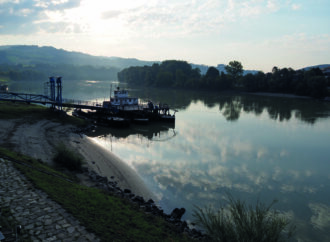
Nevertheless, it is low on the list of priorities, as water comes first. The two wells from which Véménd draws its drinking water are slowly drying up; at times last winter, there was none left at all. In winter, not in summer. For the past six years, Specki has been working on a regional water supply system running upstream from the Danube to serve five to seven villages. The plans have been approved, but the funding is lacking – also around two billion forint (approximately 5.5 million euros). At the same time, a municipal energy company is to be established. What is remarkable is that he sees both as part of the same task. “Without water, there is nothing,” he says, and by that he also means culture.
Added to this are plans for tourism: an open-air festival site set in the countryside with a reservoir for rainwater, the restoration of old German houses, and links to the walking trails and the wine regions of Villány and Szekszárd. The idea is to create an educational trail where QR codes allow visitors to listen to the music of every ethnic group that has lived here.
Politics stays out of it
Specki is under no illusions. He knows the language is in decline; when the grandparents died, its everyday use faded away with them. The music, he believes, will endure the longest.
There is a simple reason why the community works so well, a principle Specki consistently upholds: “You can be on the right, you can be on the left – we don’t care,” explains the mayor.
And then there’s another point that’s important to Specki: young people should set out into the world with a sense of purpose! Study and work, wherever that may be, to gain experience. Just like the travelling journeymen of old. Then they should come back and carry on here with new ideas, just as he himself did: “I’ve held senior positions with some of the biggest companies, including in Germany. But it was clear to me that I’d come back here to give something back to my home village,” says Specki.
 See you soon
I’d been worried the evening would drag on. It did drag on, but not long enough. Or rather, it went by too quickly. What have I taken away from it? A great deal! Above all, the fact that this young mayor doesn’t stand on the sidelines of his community, but is right at the heart of it. It’s impossible to tell whether the village supports him or he supports the village.
On the way to the guesthouse where we’re staying, you pass two cemeteries, one for Hungarian Germans and one Jewish. Both are old, both well-maintained, both frequently visited. Here, the ancestors are remembered, and their spirit is still present. Before we set off, Specki asks me if I can stay an extra day. There’s a men’s cookery class taking place the following evening. I should join in too. The ‘stronger sex’ will be preparing international cuisine under the watchful eye of the mayor himself. It is with a heavy heart that I have to decline. The gentlemen don’t hold it against me. The evening is rounded off with a glass of wine – not the first for quite a few of those present. I don’t drink alcohol, but I did have a sip nonetheless. It’s meant symbolically, after all, and it’s not a farewell, but rather a ‘see you soon’.
Mirella Sidro,
Sarajevo