

Archives
- Home
- Archives
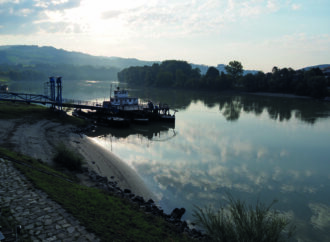
„Becoming rivered“ – how I became the river0
It all began with an emotion: a few women gathered on the riverbank to bid farewell to a friend and scatter his ashes. We asked Danube to carry him to the sea – or perhaps to let him become a drop that falls elsewhere and gives life. We entrusted him to Danube, but we also
READ MORE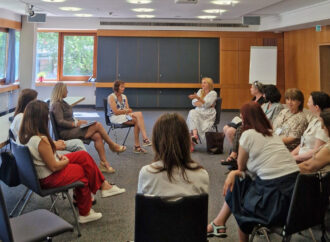
Media, AI and women from the Danube Swabians and Ukraine: How Ulm gave the Danube region a voice0
At the 2026 International Danube Festival in Ulm, women from the Danube Swabian region and Ukraine came together with opinion leaders from Serbia, Austria and Germany for a two-day workshop on combating fake news and online hate, held as part of a conference on democracy. Between media training sessions, a shared dinner in the garden
READ MORE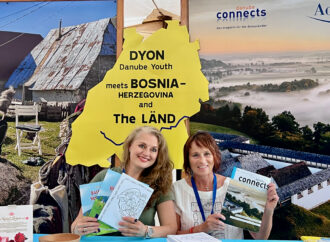
DYON brings Bosnia and Herzegovina and The LÄND together0
- Current, Main article, Society
- July 22, 2026
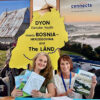
For three days, Theme Tent 2 at the International Danube Festival in Ulm became a meeting place for Baden-Württemberg and Bosnia and Herzegovina. There was spinning, snacking and marvelling. There are moments when a tent is more than just a tent. For example, when a visitor from Ulm holds a hand spindle for the first
READ MORE
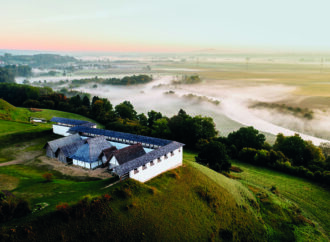
Heuneburg Castle — The Heart of the Celts0
- Allgemein, Culture, Main article, Travel
- July 10, 2026
There are many legends and fairy tales about the Celts – yet hardly anyone knows where their origins really lie. An unassuming hill overlooking the Danube in the district of Sigmaringen provides a surprising answer: here, on the Heuneburg, stood the oldest city north of the Alps 2,600 years ago – and to this day
READ MORE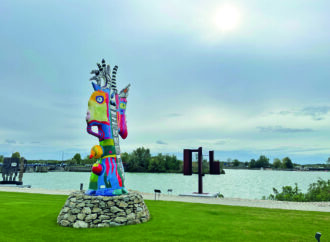
Art in the Flow —The Danubiana Meulensteen Art Museum0
The setting is truly spectacular and quite unique: situated right in the middle of an artificial peninsula in the Danube – which is exceptionally wide at this point, within the reservoir area for the Gabcˇikovo Power Plant – lies the Danubiana Meulensteen Art Museum, showcasing international and Slovak paintings, sculptures, installations, and other artworks from
READ MORE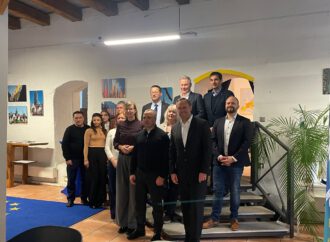
Building bridges for reconstruction0
Since the start of Russia’s war of aggression, Ulm and Neu-Ulm have been supporting their Ukrainian twin town in a variety of ways: the partnership, which was officially launched in spring 2023, initially focused heavily on humanitarian aid and donations of goods; however, it is increasingly shifting towards more sustainable and institutional forms of cooperation.
READ MORE
Latest Posts
-

-

-
-

Heuneburg Castle — The Heart of the Celts
- Allgemein, Culture, Main article, Travel
- July 10, 2026